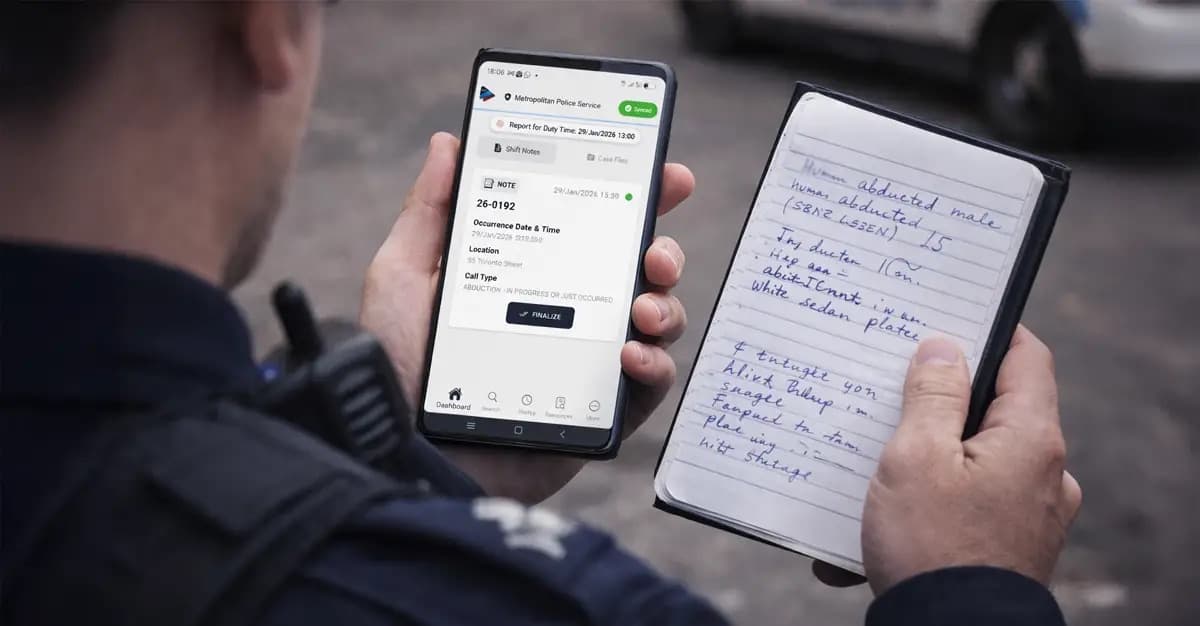
For most of the past decade, police technology in Canada has centred on a single necessary shift: moving officers off paper and onto electronic notes. The gains were real. Electronic notes improved legibility, disclosure, accessibility and day-to-day efficiency across services large and small.
But as modernization spreads, a harder question is surfacing at command tables. Is digitizing the notebook actually enough?
Canadian public safety technology company Digital Mobility Inc. (DMI) does not think so. The company behind IMP, its Intelligent Mobile Patrol® eNotes platform, argues the next generation of policing will not be defined by just electronic notes. It will be defined by how effectively agencies capture, connect, protect, and act on frontline intelligence. Some believe the next evolution isn’t about better note taking at all. It’s about transforming frontline observations into operational intelligence.
From records to intelligence
The premise is straightforward. Every shift, officers observe information that may later prove critical: a suspicious vehicle, a pattern of behaviour, a photo, a location, a person tied to a recurring incident. Historically, much of that detail stayed buried in static notes or disconnected systems.
“eNotes create records; Field Intelligence Capture creates intelligence”. Says Amir Azimi – CEO of DMI.
Field Intelligence Capture, now being deployed as part of the next generation of IMP eNotes is the process of transforming frontline observations into structured, searchable and connected operational intelligence that supports investigations, officer safety and organizational decision-making.
Proven at scale: YRP’s 60,000 hours
The concept is not theoretical. At York Regional Police, DMI’s digital notes deployment, Canada’s largest and longest-running digital notes project, has generated more than 1.6 million notes and saved in excess of 60,000 officer hours, which the service has tied to roughly $3.6 million in efficiencies. Those are among the most concrete modernization figures any Canadian service has put on the record, and they represent time returned to frontline work rather than a projection on a vendor’s slide.
The AI question
The shift arrives as artificial intelligence becomes more visible in public safety, and DMI’s position is deliberately measured. AI-assisted tools can help officers summarize and generate reports, but they can also hallucinate, reflect bias and misread nuance. The company argues the future is not AI performing the officer’s job. It is officer-led policing, supported by responsible AI models that strengthen accuracy and accountability rather than replace professional judgment.
A procurement decision, not a feature
DMI also frames electronic notes as a choice with a long tail. Notes become the foundation for reports, investigations, disclosure, analytics, and institutional memory. When they are bundled as just another component within a broader records management system, the company cautions, agencies should ask whether they are buying convenience or building long-term lock-in. IMP’s answer is a vendor-agnostic model, which also includes the company’s patented Braidmark® technology, creating tamper-proof notes that can be instantly authenticated in court.
A fit for smaller services too
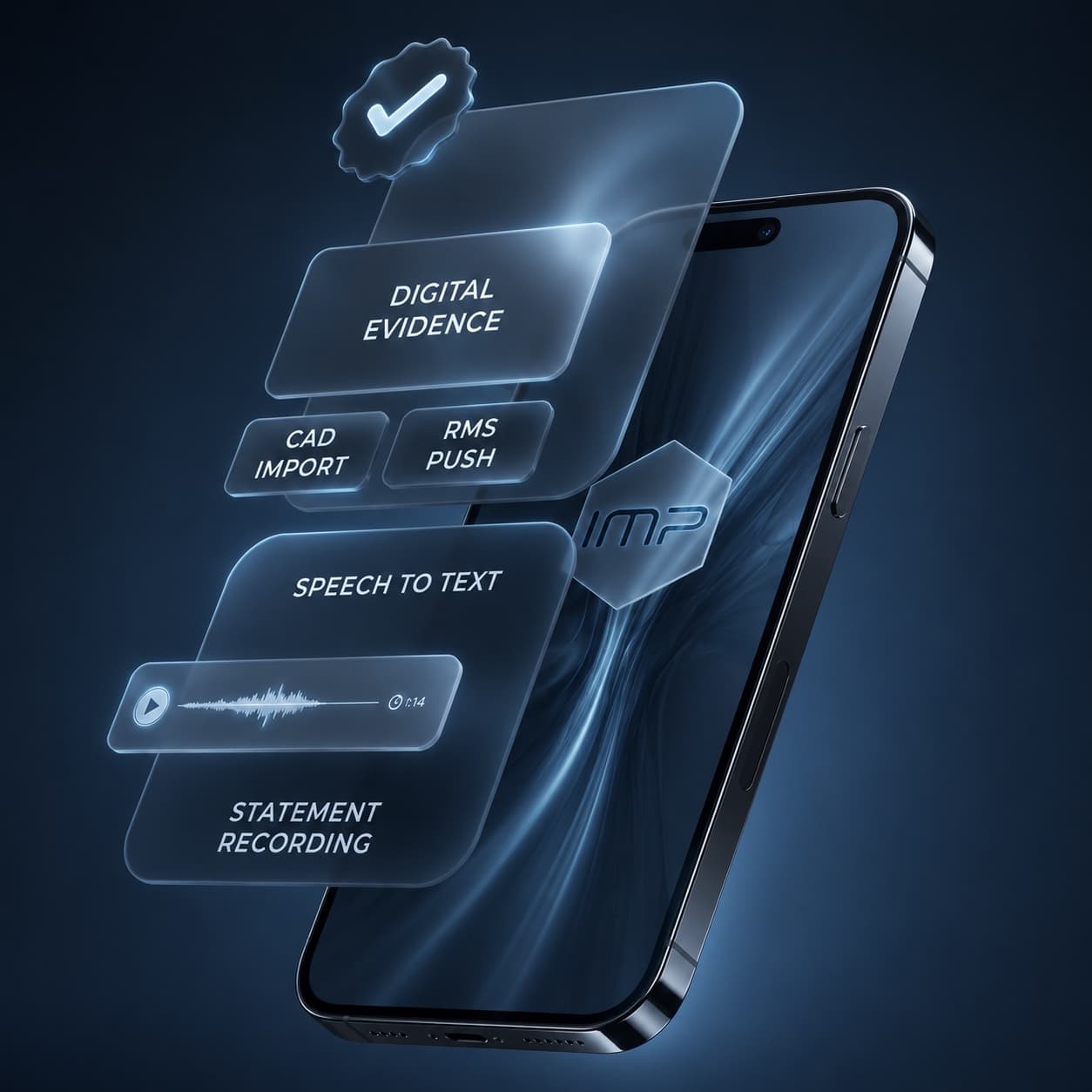
That flexibility runs in both directions. For services without an enterprise budget, IMP now includes a built-in RMS and CAD, designed for small to mid-sized agencies that want a complete option without committing to a single vendor ecosystem. Even then, the platform stays vendor-agnostic and continues to integrate with existing CAD, RMS, DEMS, Asset, and HR systems, so an agency can add capability without disrupting the infrastructure it already relies on.
The sovereignty factor
There is a Canadian dimension the company says leaders can no longer treat as background noise. As agencies modernize, it is becoming increasingly important to understand not only where data is hosted, but who ultimately controls it, which legal frameworks may apply to it, and what that means for long-term public trust. DMI, which is Canadian-owned and operated, positions homegrown technology not as a slogan but as a strategic fit for Canadian laws, disclosure obligations and community trust.
Dean Wood, CPO of DMI, reminds Police leaders that “Canadian data residency is not the same as Canadian data sovereignty.”
The next generation of IMP brings together Field Intelligence Capture, evidential integrity, responsible AI and Canadian data sovereignty into a single vendor-agnostic platform that is already being deployed by forward-thinking agencies such as Niagara Regional Police.
For police leaders evaluating technology today, the question is no longer simply how to move beyond paper. It is whether they are investing in electronic notes, or in the future of frontline intelligence.
The Next Generation of eNotes
Intelligent Mobile Patrol®, a vendor-agnostic, offline-first Field Intelligence platform.
Learn more at digitalmobilityinc.com
.